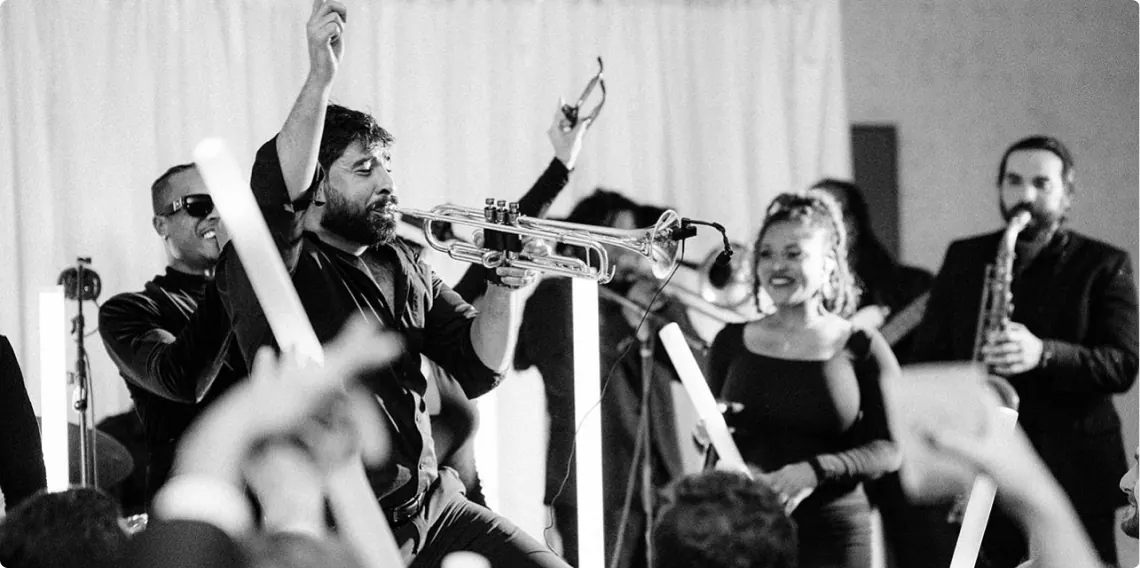
Conferences and awards ceremonies are high-stakes events. Every moment is orchestrated to inspire, recognize, and connect — and music is the invisible thread that ties it all together. The right music elevates a conference keynote from a speech to an experience. The right walk-on music transforms an employee recognition from a polite clap to a standing ovation.
Yet music is one of the most overlooked elements in conference and awards planning. Many organizers default to a generic Spotify playlist and hope for the best. That’s a missed opportunity.
At Avalon Music, we’ve provided live music for conferences, conventions, awards banquets, and corporate ceremonies across Houston for over three decades. We understand the unique musical demands of these events — from precise timing cues to dynamic volume management — and we’ve helped hundreds of organizations create moments their attendees remember.
Here’s your comprehensive guide to conference and awards ceremony music — what works, what doesn’t, and how to elevate your next event.
The Role of Music at Conferences and Ceremonies
Music at a conference or awards ceremony serves very different functions than music at a party. Understanding these roles is key to getting the music right.
Atmosphere and Mood Setting
Music shapes how attendees feel the moment they walk in. The right pre-event music creates anticipation, professionalism, and energy — before a single word is spoken.
Transitions and Flow
Music smooths the gaps between speakers, segments, and program elements. Without musical transitions, an awards ceremony feels choppy and disjointed. With them, it flows like a well-produced show.
Emotional Amplification
When a 30-year employee receives a lifetime achievement award, the music that plays as they walk to the stage amplifies the emotion of the moment exponentially. Music is a force multiplier for the feelings you want to create.
Energy Management
A three-hour awards ceremony can drag. Strategic music — energetic bumpers between segments, upbeat interstitials, and celebratory moments — maintains audience engagement throughout.
Conference Music: Segment by Segment
Pre-Conference / Registration Music
When: As attendees arrive and register (30-60 minutes before the program starts)
What works:
- Upbeat instrumental jazz or smooth jazz
- Contemporary instrumental covers
- Light, energetic background music that builds anticipation
- Jazz trio performing live in the registration area
Volume: Low — attendees are checking in, finding seats, greeting colleagues. Music should be present but not dominant (65-70 dB).
Pro tip: Live musicians in the registration area make an immediate impression that signals “this is a premium event.” Even a solo pianist or jazz duo elevates the arrival experience dramatically.
Opening Ceremony / Keynote Introduction
When: The first 2-5 minutes of the main program
What works:
- A strong, recognizable musical intro that signals “the show is starting”
- Film-score style builds (think Hans Zimmer energy)
- Upbeat, energizing tracks that create excitement
- Live band playing a dramatic opener then transitioning to the speaker’s introduction
Volume: Start moderate and build. The music should crescendo as the emcee or keynote speaker takes the stage, then fade smoothly as they begin speaking.
Example: A 5-piece band plays an energetic 90-second instrumental opener. As the CEO takes the stage, the music builds to a peak, then fades to silence for the first words.
Networking Breaks and Meal Periods
When: Between sessions, during meals, during coffee breaks
What works:
- Jazz trio or quartet performing live during meals
- Smooth background playlist during shorter breaks
- Upbeat instrumental music during networking — slightly higher energy than dinner music
- Genre variety: jazz standards, bossa nova, light pop instrumentals
Volume: Conversational level. Attendees need to network and talk. Music should fill silence without competing with conversation (70-75 dB).
Red flag: Dead silence during breaks. Without music, networking becomes awkward and the room feels like a library. Even a simple background playlist is better than nothing — but live music is exponentially better.
Awards Presentation: Walk-On Music
When: As each award winner approaches the stage
What works best: Walk-on music should match the energy and personality of the moment. Here’s a framework:
For formal / lifetime achievement awards:
- “Pomp and Circumstance” (classic but effective)
- Film score themes (Star Wars, Rocky)
- “Feeling Good” — Nina Simone
- A live band playing a jazz-inflected fanfare
For fun / team awards:
- “We Are the Champions” — Queen
- “Celebration” — Kool & the Gang
- “Eye of the Tiger” — Survivor
- Current pop hits the winner might enjoy
For CEO / executive presentations:
- Custom walk-on music that becomes their “signature song”
- A 15-30 second instrumental theme played by the live band
Timing is everything: Walk-on music should start the instant the winner’s name is announced and fade as they reach the microphone. A live band does this perfectly because they can watch the winner’s pace and adjust in real time. Pre-recorded tracks require precise cueing.
Book a band that masters the details. Contact Avalon Music at (832) 723-8886 or visit theavalonmusic.com/book-a-band/.
Awards Presentation: Underscore
When: During video tributes, “In Memoriam” segments, emotional speeches
What works:
- Very soft, ambient music that supports without distracting
- Piano or strings for emotional moments
- A live musician performing softly under a tribute video has incredible impact
- The key word is subtle— the music should enhance, never compete
Volume: Very low — barely perceptible. If attendees consciously notice the underscore, it’s too loud.
Segment Transitions (Bumpers)
When: Between program segments, between speakers, during set changes
What works:
- 15-45 second musical bumpers that signal a transition
- Upbeat, energetic music to re-engage attention after a long segment
- Live band playing quick, punchy transitions
- Consistent style throughout creates cohesion
Pro tip: Use a consistent musical “language” for bumpers. If your opening was jazz-influenced, keep the bumpers in the same style. Consistency creates a polished, professional feel.
Closing Ceremony
When: The final 5-10 minutes of the program
What works:
- An uplifting, memorable closing song that sends attendees off energized
- If there’s a live band, a full-band performance of something inspiring
- Music that builds as the closing speaker wraps up, reaching a peak as they finish
- “Walking out” music that plays as attendees leave — keep it upbeat and positive
Great closing songs:
- “Don’t Stop Believin'” — Journey
- “Best Day of My Life” — American Authors
- “Beautiful Day” — U2
- “Signed, Sealed, Delivered” — Stevie Wonder
- “September” — Earth, Wind & Fire
Live Band vs. Playlist vs. DJ: What’s Best for Conferences?
Live Band
Best for: Premium conferences, awards galas, events where impression matters
Advantages:
- Walk-on music timed perfectly to each winner’s pace
- Dynamic volume adjustments in real time
- Visual impact — musicians on stage add production value
- Can serve as both ceremony musicians and post-ceremony dance band
- Emotional moments hit harder with live performance
Considerations:
- Higher cost ($5,000-$15,000+ depending on size)
- Requires stage space
- Needs coordination and rehearsal
Professional DJ
Best for: Budget-conscious events, smaller ceremonies, tech-forward companies
Advantages:
- Unlimited song selection
- Precise track cueing
- Lower cost ($1,000-$3,000)
- Minimal space requirements
Considerations:
- Lacks the visual and emotional impact of live music
- Can feel less premium
- Walk-on timing requires skill and practice
Curated Playlist
Best for: Breakout sessions, registration areas, meal service where live music isn’t feasible
Advantages:
- Lowest cost (free to minimal)
- No coordination needed
- Consistent and predictable
Considerations:
- No ability to adjust in real time
- Can feel generic and impersonal
- Walk-on cueing is nearly impossible without a dedicated operator
The Ideal Combination
For large conferences with multiple elements, the best approach is often a combination:
- Live jazz ensemble for the main awards ceremony and dinner
- DJ for the post-ceremony celebration/dance
- Curated playlist for breakout sessions and registration
Avalon Music can coordinate all three for a seamless experience. Visit our Look & Listen page to see and hear our musicians.
Genre Guide for Conference and Ceremony Music
Jazz and Standards
Best for: Formal awards ceremonies, networking events, executive conferences
Why it works: Universally sophisticated, appropriate for any professional setting
Orchestral / Film Score
Best for: Opening ceremonies, emotional video tributes, keynote introductions
Why it works: Dramatic and cinematic, creates gravitas and importance
Contemporary Pop (Instrumental)
Best for: Tech conferences, younger audiences, energetic breaks
Why it works: Familiar and upbeat without lyrics to distract
Smooth R&B and Soul
Best for: Diverse audiences, evening events, post-ceremony celebrations
Why it works: Warm, engaging, and crowd-pleasing across demographics
Big Band and Swing
Best for: Premium galas, black-tie ceremonies, celebratory events
Why it works: Elegant, powerful, and unmistakably festive. Explore our big band options.
Planning Your Conference Music: A Step-by-Step Approach
Step 1: Map Every Musical Moment
Walk through your program minute by minute and identify every place music plays a role — including moments you might not have considered, like transitions and breaks.
Step 2: Assign Purpose to Each Moment
Is this moment about energy? Emotion? Transition? Background? The purpose determines the style and volume.
Step 3: Choose Your Format
Live band, DJ, playlist, or combination? Match the format to the importance and budget of the event.
Step 4: Coordinate with Production
Music must sync with AV, lighting, speakers, and the event timeline. The band or DJ needs the full program rundown with timing cues.
Step 5: Rehearse Key Moments
Walk-on music, opening ceremony, and emotional moments should be rehearsed (at minimum, talked through) before the event. A 30-minute rehearsal eliminates most day-of problems.
Working with Avalon Music for Your Conference
Our team specializes in the precision and professionalism that conference entertainment demands:
- Detailed timeline coordination with your production team
- Custom musical cues for walk-ons, transitions, and presentations
- Versatile ensembles that handle both ceremony and celebration
- Professional attire matching your event’s formality
- Decades of experience with Houston’s conference and convention scene
We work with your event planner, AV team, and venue to ensure every musical moment is executed flawlessly.
Frequently Asked Questions
Can a live band handle the precise timing needed for awards ceremony walk-on music?
Absolutely — this is one of the biggest advantages of live music over pre-recorded tracks. A skilled band watches each award winner approach the stage and adjusts the music’s length, intensity, and ending in real time. No awkward early cutoffs or too-long musical intros. At Avalon Music, our bands are experienced with ceremony cues and rehearse walk-on timing as part of our standard preparation.
How many songs does a band need to know for a typical awards ceremony?
For a standard awards ceremony (1-2 hours), the band should have 15-25 pieces prepared: walk-on music selections, transition bumpers, background dinner music, and a few post-ceremony dance songs. Most of these aren’t full songs — they’re 15-60 second excerpts. Our bands prepare comprehensive ceremony setlists tailored to each event.
Should we have music playing during the meal at a conference?
Yes — always. A silent dining room at a conference feels awkward and institutional. Live jazz or soft background music transforms the meal into a pleasant, social experience. It also provides natural sound cover that makes conversations feel more private. A jazz trio is the gold standard for conference dining music.
What volume level is appropriate for conference background music?
During networking, meals, and registration, keep music at 65-75 dB (comfortable conversation level). During presentations, music should either be off or at underscore level (50-60 dB). For walk-on music and celebratory moments, 80-85 dB creates excitement without being overwhelming in a conference setting. Professional musicians manage these dynamics naturally.
Can the same band play the ceremony and the post-ceremony celebration?
Yes — and this is often the most cost-effective and seamless approach. A versatile band from Avalon Music can provide refined, precise ceremony music during the awards presentation, then shift gears to high-energy dance music for the post-ceremony party. One band, two distinct performances, no transition gaps.
Ready to elevate your conference or awards ceremony with professional live music? Contact Avalon Music today at (832) 723-8886 or visit theavalonmusic.com/book-a-band/ to start planning.
The Right Music Makes a Good Event Great
Professional Bands, DJs, and Musicians for Weddings, Corporate Events & Private Parties in Houston.
View Bands